KIKI GAFFNEY
ONLINE EXCLUSIVE EXHIBITION

Kiki Gaffney is an artist currently based in Philadelphia, Pennsylvania. Gaffney received her Bachelor’s of Arts from Loyola College in Baltimore and her Master’s of Fine Arts from the University of the Arts in Philadelphia. She is continually inspired by the visual patterns of her everyday surroundings – whether organically formed in nature or manufactured by human activity. Her work depicts the hidden systems of growth and decay along with the spontaneity of movement within wind, light and shadow. Gaffney’s practice is an active, meditative process which highlights the beauty of configuration and contemplation.
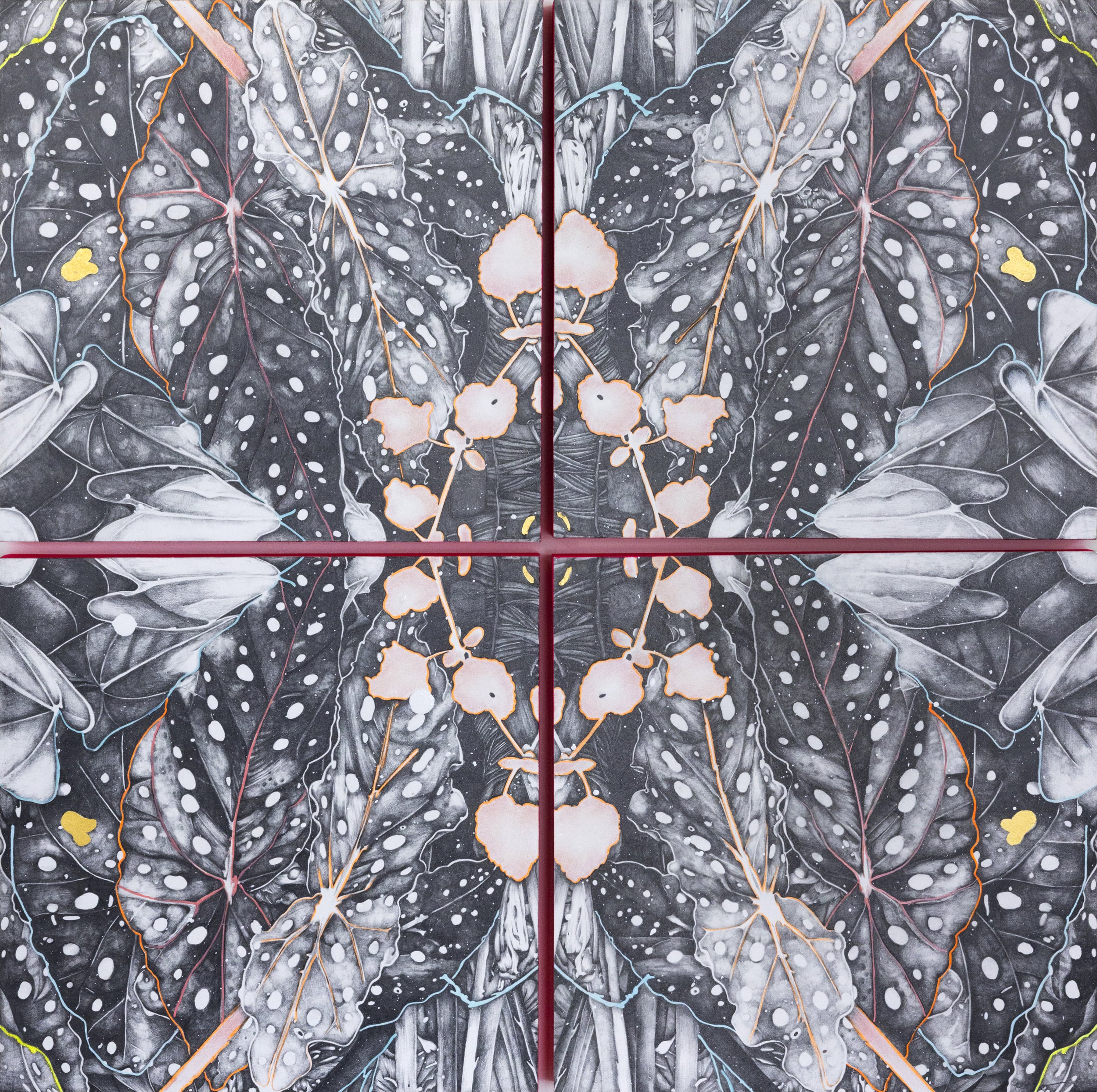
Kiki Gaffney | Continual Conversation II, 2025 | graphite, acrylic, pastel, colored pencil, gold leaf, glitter on panels | 20 x 20 in. | $4,000

Kiki Gaffney | Interior, 2019 | acrylic, graphite and collage on paper | 30 x 22 in. | $3,500
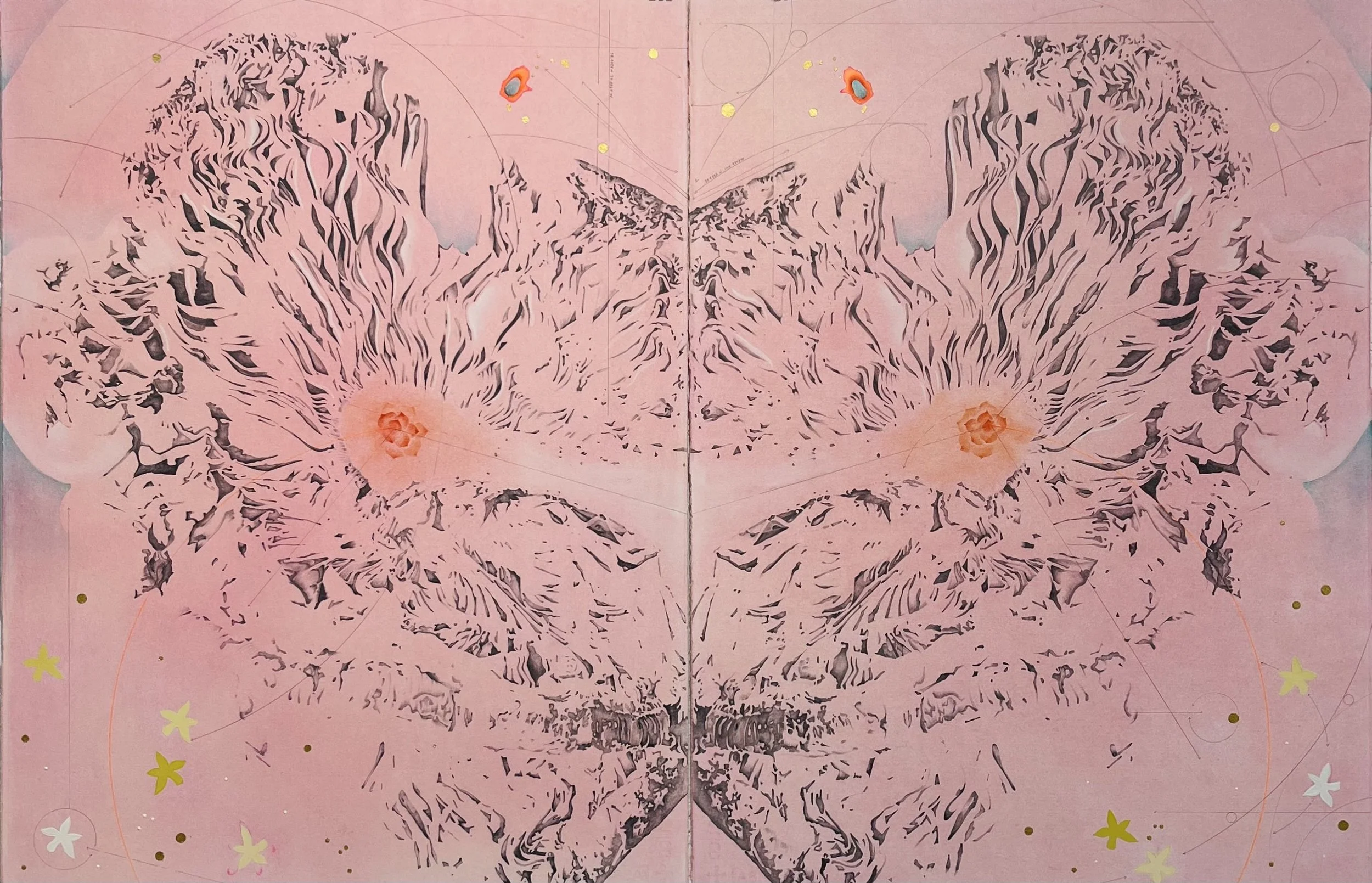
Kiki Gaffney | Bloom, 2026 | graphite, pastel, acrylic, colored pencil, gold leaf on paper | 30 x 45 in. | Please contact gallery for pricing.
Kiki Gaffney | Silent Symphony IV, 2024 | graphite, acrylic, spray paint, glitter on paper | 45 x 30 in. | $5,000

Kiki Gaffney | Tree Mandala, 2019 | oil, graphite, gold leaf on wood panel | 39 x 36 in. | $7,500
Kiki Gaffney | Blue Arch, 2017 | oil and graphite on wood panels | 12 x 24 in. | $3,400
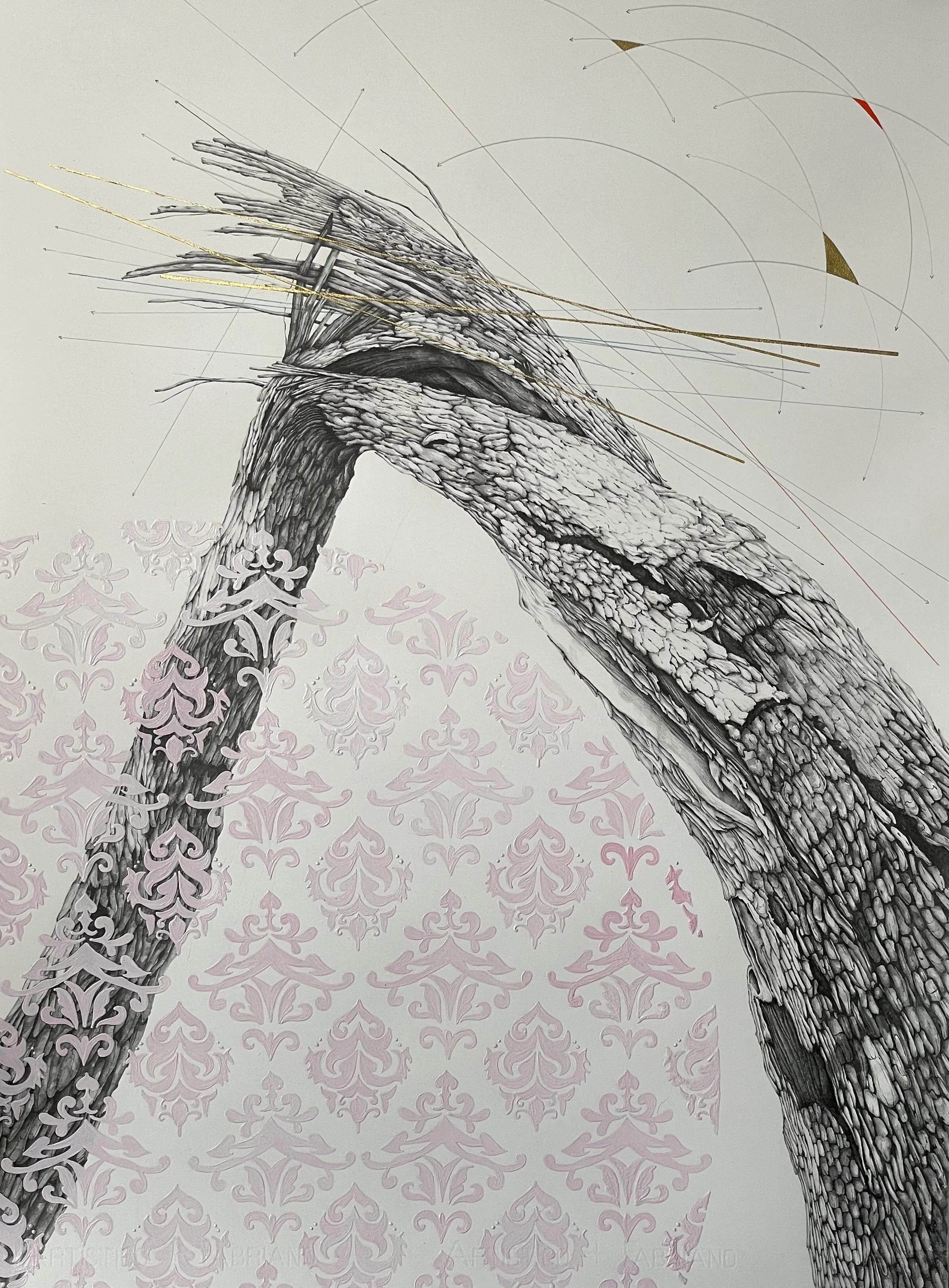
Kiki Gaffney | Geometry, 2021 | graphite, acrylic, colored pencil, gold leaf on paper | 30 x 22 in. | Please contact gallery for pricing.

Kiki Gaffney | The Valley, 2018 | oil, graphite and gold leaf on wood panel | 25 x 25 in. | $5,000

Kiki Gaffney | Striped Spire, 2017 | oil, graphite and gold leaf on wood panels | 8 x 16 in. | $2,800

Kiki Gaffney | Nature's Notation I, 2021 | acrylic, graphite, and gold leaf on mounted photograph | 14 x 11 in. | $1,400

Kiki Gaffney | Patterns, 2020 | graphite, gold leaf, and flashe on panel | 20 x 16 in. | $3,500
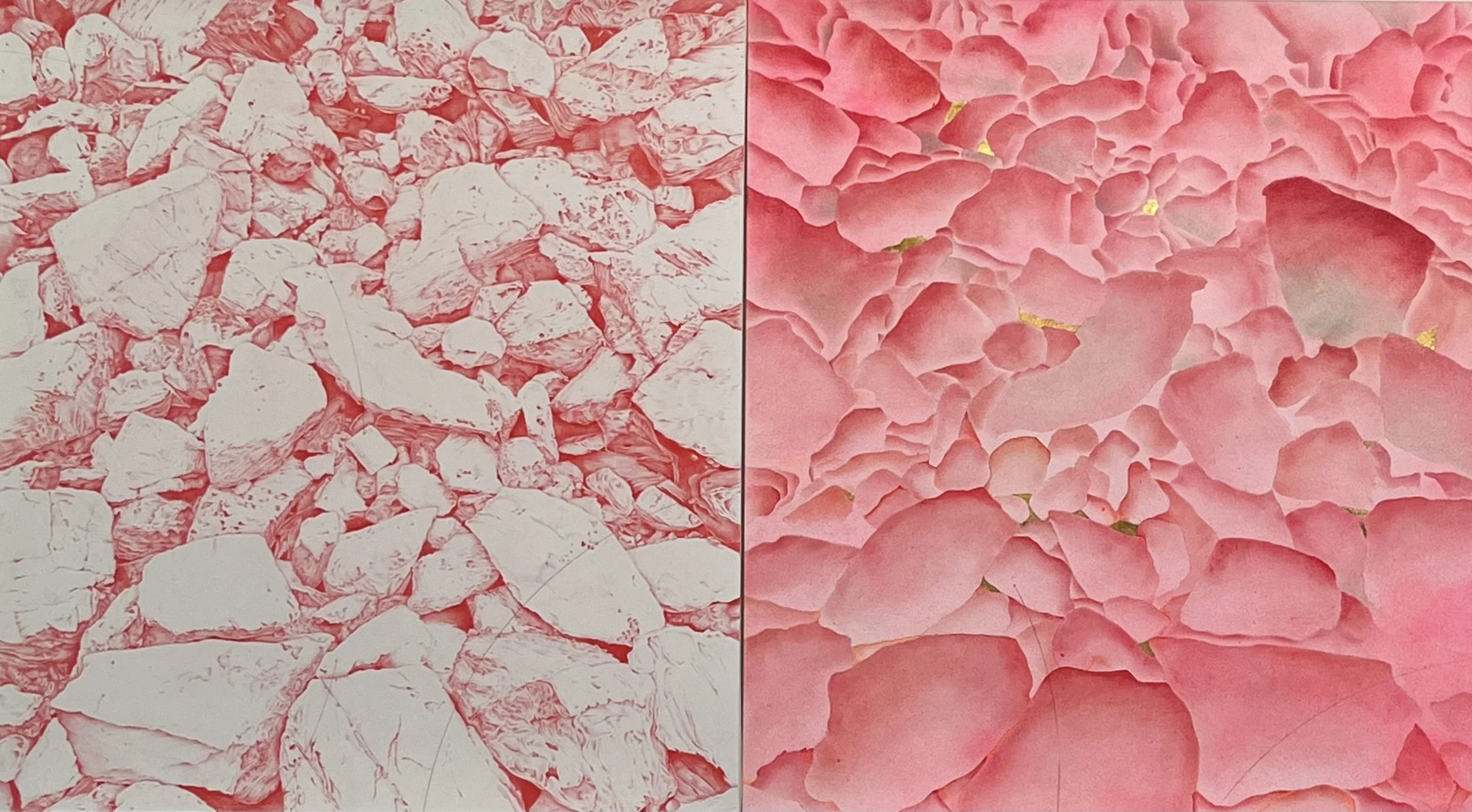
Kiki Gaffney | In the Deep, 2025 | graphite, spray paint, pastel, colored pencil, gold leaf on paper | 23.5 x 43 in. | Please contact gallery for pricing.

Kiki Gaffney | Damask Mandala, 2020 | acrylic and gold leaf on panel | 14 x 11 in. | $2,300

Kiki Gaffney | Polka Dot Mountain Range, 2018 | oil and graphite on wood panel | 25 x 25 in. | $5,000

Kiki Gaffney | Nexus Study 2, 2022 | photograph, acrylic, glitter on paper | 16 x 12 in. | $1,200

Kiki Gaffney | Gold Facade, 2019 | acrylic, graphite and collage on paper | 30 x 22.5 in. | $3,500
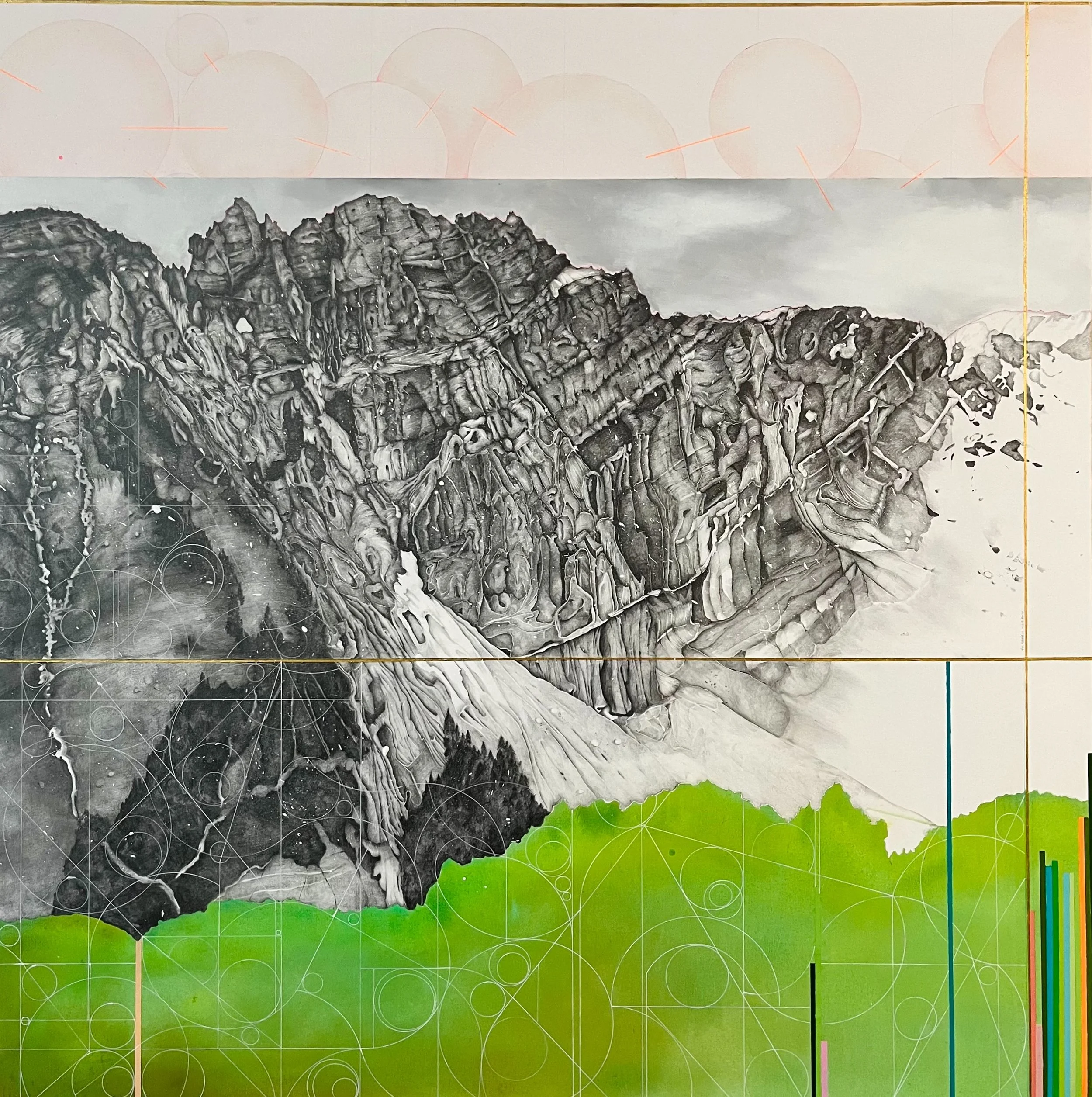
Kiki Gaffney | As Above, So Below, 2025 | graphite, acrylic, oil, spray paint, colored pencil, ink, gold leaf on paper mounted on panel | 40 x 40 in. | Please contact gallery for pricing.
EXCLUSIVE ARTIST Q&A
What has inspired you in some of your newer work?
Lately I have been thinking about ‘systems’ in nature - systems of movement, such as seed disbursement through wind or the flow of water; systems of light and reflection; and systems of communication, such as the mycorrhizal network. I’ve also been thinking about what we can visually see versus what is hidden, or underground. I am very interested in the harmony of nature, how all of these systems work together to create perfect flow, although it may seem visually chaotic from a limited vantage point. When I look at an organic object, whether something vast like a mountain range, or something microscopic, like a fungal specimen, they are connected by communication and by movement that is beyond what we can see, so my work is about imagining that conversation and connection through both recognizable and abstract imagery.
What does a typical day in the studio look like?
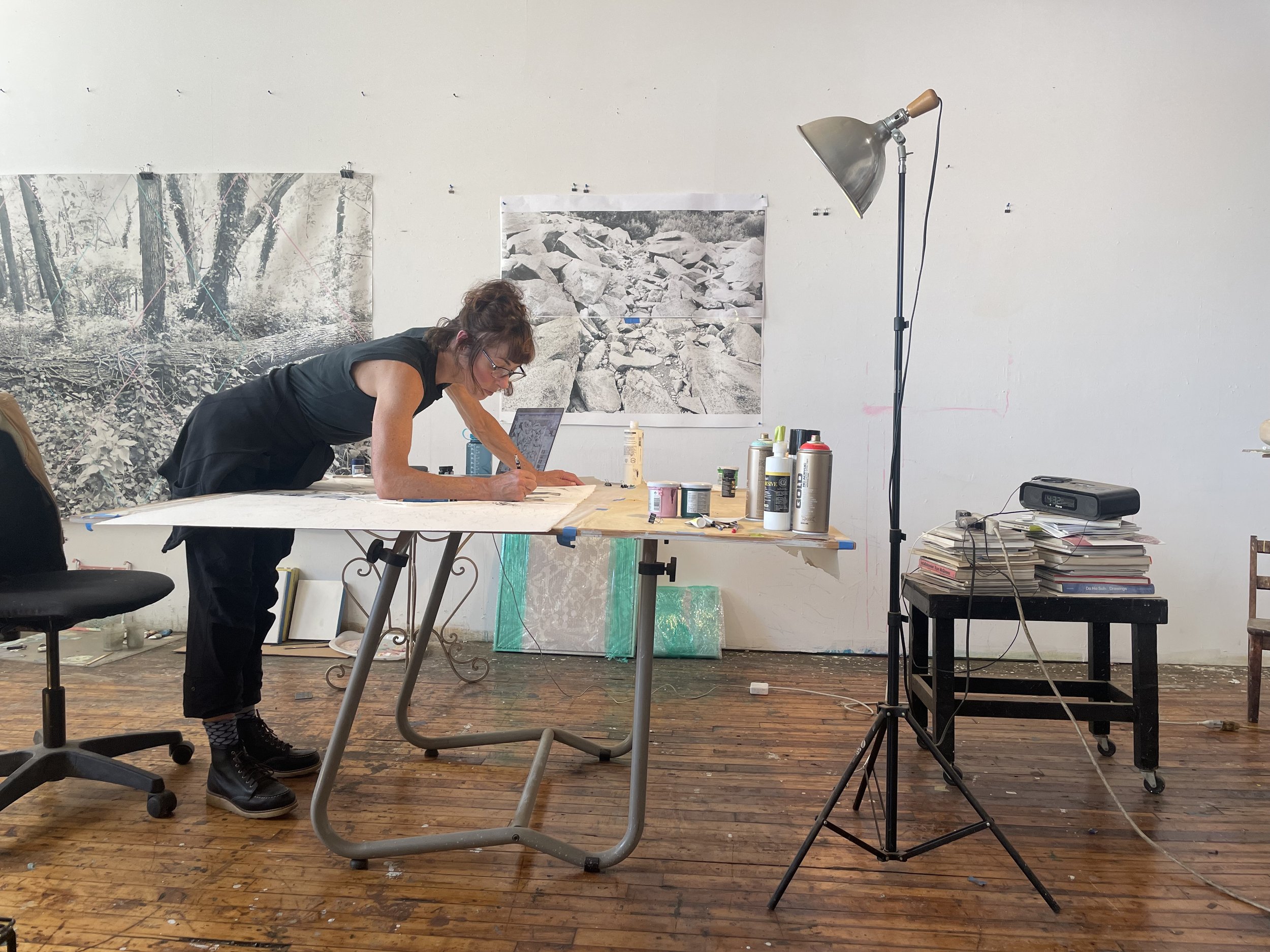
It depends on the day! I work part-time as a woodworker and yoga teacher, so some days I only have a few hours in the studio. Fridays are great because I get to spend the whole day in the studio. Regardless of how much time I have, I do try to plan out in advance what I want to accomplish, so I can use the time to my advantage. I generally try to focus on the work and only use my laptop to look at imagery or research ideas that may pop up. I listen to music or podcasts, lately Malcolm Gladwell’s Revisionist History. It helps me to zone out and get into whatever drawing I am working on. I take a quick break for lunch and, if it’s nice out, maybe a little walk around the block. My studio is located in a pretty rundown section of North Philadelphia, but I still manage to find lots of beautiful details, either in the architecture, or the little bits of nature I see.
There are many different materials incorporated into your pieces - how do you choose what to work with?
Two materials I work with quite a bit are gold leaf and glitter. Their reflective qualities allow the work to shift in perspective, depending on what angle you are at. They are also great materials for representing light (especially the gold leaf). Further, these materials add a bit of ornateness or reverence to the subjects I draw, which are often objects not considered traditionally beautiful, such as a fallen and decaying tree. In the last couple years I discovered colored graphite (for mechanical pencils), so I have been exploring how color can render an image and change the whole feel of the piece. Color in general is also super important in my work. I am interested in the idea of ‘sottobosco’ (forest floor or undergrowth), which visually is very dark. I try to reimagine it with bright colors as a way of ‘shedding light’ on what we cannot see.

Kiki Gaffney
Blue Arch, 2017
oil and graphite on wood panels
12 x 24 in.
$3,400
You’ve described nature as a space that regulates your own sense of calm— how do you think that emotional and personal experience translates in your work and onto the viewer?
When I was in graduate school, a visiting artist gave crits of our work, and the only thing she said to me was "you like pretty things, don't you." I remember feeling stupid, and that 'pretty' art was somehow bad art. I did a bunch of black charcoal drawings after that, but eventually gained confidence and moved back to color. These days, my work is all about beauty, and I have really embraced it as a way to draw viewers into the 'worlds' that I am creating.
When I am in nature, especially in a place as magnificent as the Wasatch Mountains for example, I become very present to my breath and heartbeat, which by definition, puts me in the present moment, since breathing and heart beats take place in real time. This also allows me to notice details in the natural world that often tend to go unnoticed, such as lichen on rocks, mushrooms on trees, the 'meep' sound of pikas and on and on. Being in nature simply allows me to slow down mentally, and to experience the wonder and awe that is right in front of me. I draw recognizable objects in my work, such as trees or mountains, and then fill in around them what I imagine is taking place underground or above ground - hidden systems of communication such as the mycorrhizal network or processes like the release of oxygen.
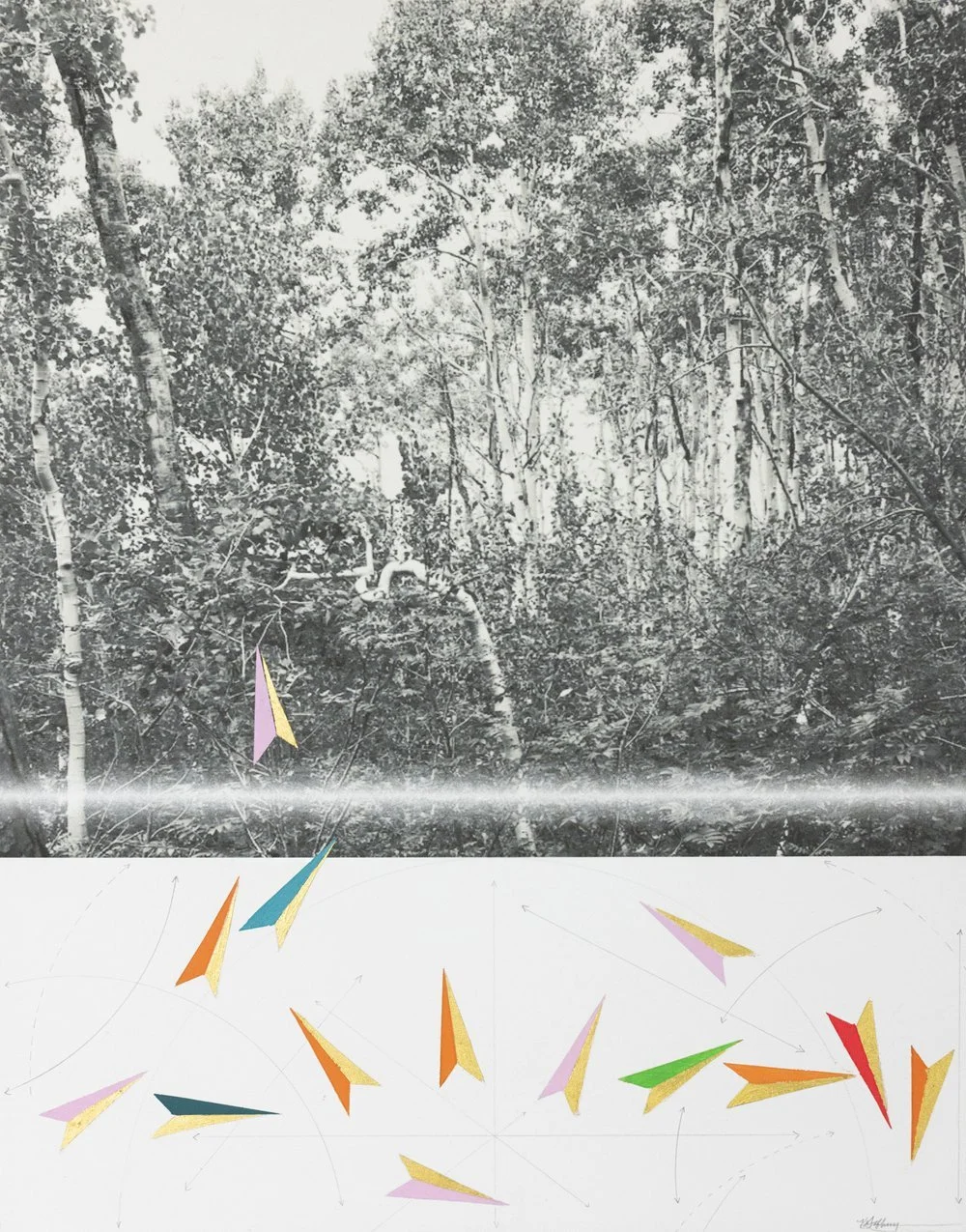
Kiki Gaffney
Nature's Notation I, 2021
acrylic, graphite, and gold leaf on mounted photograph
14 x 11 in.
$1,400
The detailed drawings I do allow me to really learn about the subject, and it is also a very slow and meditative process for me. The warm or bright colors I use reflect how I feel when in nature, and gold leaf and glitter add a light dimension. Gold leaf has also historically been used in artworks to create a radiance or spiritualness, which corresponds to how I feel when in the natural world. My hope is that the details and the materials I use draw a viewer in close, where they can take a moment to pause or reflect or simply wonder/wander through the work at their own pace.
Having had multiple artist residency experiences, how have they shaped your practice and approach when creating bodies of work in your personal studio?
I have had the good fortune to experience several artist residency programs, both in group settings (OSGF, Virginia Center for the Creative Arts (VCCA), Monson Arts), as well as solitary (Montello Foundation) and remote residency programs (Denver Botanic Gardens). One of the biggest gifts of a residency is the time and space to think, experiment and create work without the distractions or responsibilities of life outside of a residency.
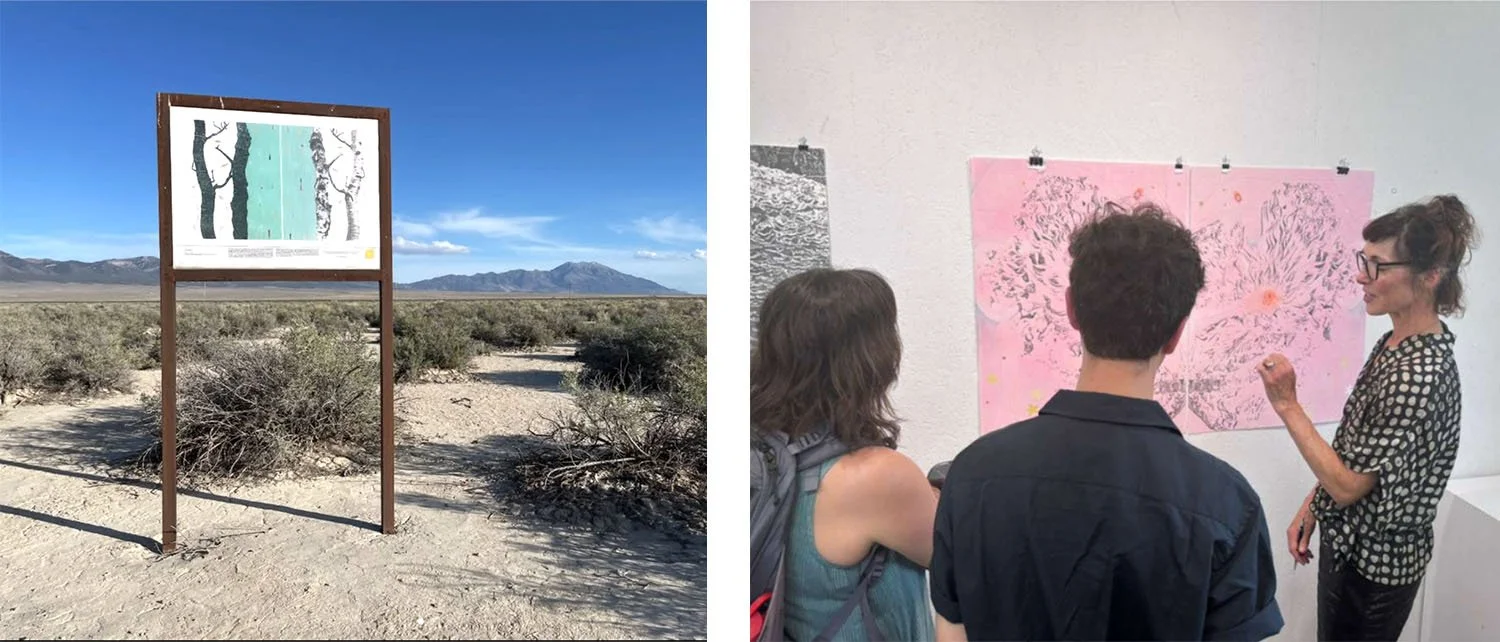
Personally, I most enjoy the ability to fully immerse myself in the work - starting very early in the morning and working til very late evening. My thinking process becomes more cohesive and I am able to keep distractions to a minimum. This is crucial, because it helps me to prioritize my artistic practice when I am home from a residency, and back to work and family obligations. I have also had the great fortune of meeting incredible artists of different disciplines on residencies, such as writers, musicians and scholars. Learning about their processes, talking about artistic practices and exchanging ideas often leads to breakthroughs in thinking about my own work. It is easy (for me at least) to get stuck in a kind of 'tunnel vision,' but simple conversations can lead to new levels of inquiry and imagination.
Finally, I would say that artist residency programs offer validation! The artistic path is a very hard way to make a living, it can be lonely and one deals with a tremendous amount of rejection. With every artist residency program I have attended, I felt celebrated and valued, and that what I do matters and is crucial to the health and wellbeing of society. So when I am toiling away in my studio, wondering if I am making any kind of difference, I think about my experiences on residencies, and I know that the answer is yes.

Kiki Gaffney
Silent Symphony IV, 2024
graphite, acrylic, spray paint, glitter on paper
45 x 30 in.
$5,000
All featured artworks by Kiki Gaffney are available for acquisition at Modern West. To schedule an appointment to view any pieces in person, contact us at info@modernwestfineart.com.